
Shrewsbury · Shropshire · West Midlands
Expert care for the shoulder, elbow, wrist and hand
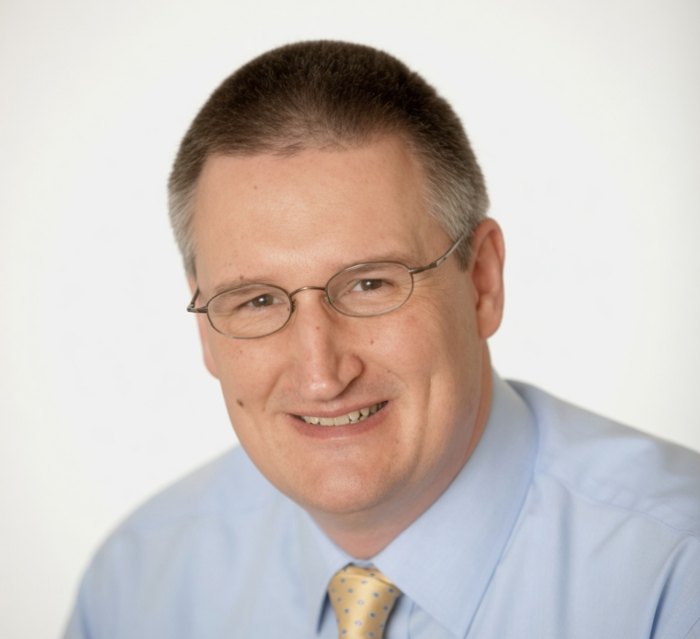
Mr Robert Turner is a Consultant Trauma and Orthopaedic Surgeon who specialises in arms. He takes the time to help every patient understand their condition and provide the best possible treatment.
Shoulder · Elbow · Wrist · Hand
A good surgeon knows when to operate, as well as how.
Many musculoskeletal problems can be successfully treated without surgery. Mr Turner will listen to you carefully and examine you to find out exactly what is causing the problem. In some cases, surgery will be necessary but many patients can be successfully cured by non-operative treatments.
Years in the NHS
Clinical Director for Orthopaedics at the Shrewsbury and Telford Hospital NHS Trust.
Non-surgical first
Splints, physiotherapy, and joint and soft tissue injections, with surgery when it will genuinely help.
Local anaesthetic procedures
Many hand operations can be done while you are awake, so you go home the same day.
Time to explain
Every patient leaves understanding their condition, the outlook and their options.
Shared decision-making
Ensuring you understand your condition and all the available treatment options allows us to tailor a treatment plan that suits your goals.
Timely intervention
The majority of shoulder and upper limb conditions can be treated without the need for surgery. Whether it be physiotherapy, injections or surgery, early and timely intervention is key to getting the best outcome for your condition.
Your journey
Book an appointmentBook
Call the Nuffield Health Shrewsbury Hospital or book online. Insured patients should get pre-authorisation from their insurer first.
Consultation
Mr Turner listens, examines your arm and explains what is causing your problem, often with an X-ray or scan.
Treatment plan
Together you choose from the options, usually starting with splints, physiotherapy or an injection.
Recovery
If you need an operation, many are day cases under local anaesthetic, followed by therapy to get you back to normal.
What patients say
out of 5 from 22 verified reviews on Doctify
“Totally professional, very knowledgeable and explained all options thoroughly.”
“Mr Turner helped to get motion back into my left shoulder and also checked that no underlying condition was causing it.”
“Would highly recommend Mr Turner. Very patient-centred, empathetic and he really attends to patients needs and concerns”
“All visits throughout have been excellent. Clear explanations with good detail.”
Reviews from verified patients on Doctify, quoted in full. Rating as shown on Doctify in November 2026. Read all reviews on Doctify
Where does it hurt?
Point to the problem area on a picture of the shoulder, elbow or hand, answer a few questions, and read about the most likely cause.
Mr Turner treats the following areas in the arm. Choose which area you are interested in today
Tap a joint, or use the Tab and Enter keys.
Common arm problems
All conditionsPopular pages
Steroid injections
Information to help you prepare for a steroid (corticosteroid) injection, and to look after yourself afterwards.
A steroid injection places anti-inflammatory medicine (such as hydrocortisone) directly into a sore joint or soft tissue. It is a common, effective way to calm pain and swelling from conditions such as arthritis, tendonitis and bursitis, and works especially well alongside physiotherapy.
Procedure codes
- W9040: injection in clinic
- W9030: injection under X-ray or ultrasound guidance
Often used for
How do steroid injections help?
Instead of taking tablets that travel through your whole body, the medicine is placed exactly where it is needed. Steroids actively reduce the inflammation and swelling inside the joint or tissue that is causing your pain.
Common questions
Will the injection hurt?
When performed by an experienced clinician, the injection is quick, with minimal discomfort. If a local anaesthetic is included, the area will also feel numb shortly afterwards.
Do steroids just mask the pain?
No. They do not simply cover up pain signals. They reduce the underlying inflammation and swelling that is causing the pain.
Are injections only a temporary fix?
Not necessarily. Many people get long-lasting or even permanent relief. For others, the pain-free window makes it possible to do physiotherapy exercises that were too painful before. Occasionally relief is short-lived, or symptoms do not improve.
An injection did not work in another joint. Will this one work?
Every joint and condition responds differently. If an injection did not help in one area, such as a knee or hip, it does not mean an injection somewhere else will not work.
Can you only have three steroid injections in your lifetime?
No, that is a common myth. Most doctors agree you can safely have up to three injections a year into each area. However, if an injection wears off in less than six months, repeating it is less likely to give a long-term solution.
Preparing for your appointment
- What to wear: loose, comfortable clothing that makes it easy to reach the area being treated.
- Eating, drinking and medicines: you can eat, drink and take your normal medicines unless you have been told otherwise.
- Getting home: after an arm or upper-body injection you can usually drive yourself home, but we recommend resting in the clinic for 20 minutes first. If local anaesthetic affects your movement, arrange for someone else to drive.
- Questions and consent: please ask any questions before we start. You will be asked to confirm you are happy to go ahead.
What to expect
- Early comfort: if a local anaesthetic is included, the area may feel numb and pain-free for a few hours.
- Lasting relief: the steroid usually takes a few days to a couple of weeks to work. Many patients get lasting relief, but some notice no improvement and some get relief for only a short time.
- Protecting your joints: injections are generally limited to around three a year in the same area.
Before your injection: helping us keep you safe
Most adults and children can safely have hydrocortisone injections. Please tell your clinician beforehand if any of these apply:
- Allergies: you have ever reacted to hydrocortisone or any other medicine.
- Infections and healing: you have an infection (including an eye infection), unhealed wounds, or have recently been in contact with chickenpox, shingles or measles.
- Vaccinations: you have recently had, or are due to have, any vaccinations.
- Pregnancy: you are pregnant, trying to get pregnant, or breastfeeding.
- Health conditions: diabetes, high blood pressure, glaucoma, fragile bones (osteoporosis), or a personal or close family history of depression or bipolar disorder.
- Medicines and surgery: you take blood thinners, immunosuppressants, other steroids, or tablets for HIV or fungal infections, or you have joint metalwork or upcoming surgery (especially a joint replacement).
Looking after yourself afterwards
- Rest: rest the treated area for the first 24 to 48 hours. Avoid heavy lifting, high-impact exercise or straining the area for several days up to two weeks, as advised.
- Driving: do not drive straight away if the area feels numb, stiff or restricted, and rest for 20 minutes after an arm injection.
- Mild soreness: an ice pack wrapped in a cloth helps. You can take everyday painkillers such as paracetamol or ibuprofen if needed.
Normal reactions and side effects
Because the medicine stays mostly where it is injected, whole-body side effects are much less likely than with steroid tablets.
Common, temporary reactions (usually settle within a few days)
- Steroid flare: the joint may feel more achy or swollen for 24 to 72 hours before it starts to improve. This settles on its own.
- Skin changes: light bruising, a warm flush in the face for 1 to 3 days, or slight thinning, dimpling or colour change of the skin at the injection site.
- Blood sugar and periods: if you have diabetes, your blood sugar may run higher for a few days, so check it more often. Some people notice a temporary change to their menstrual cycle.
Less common effects
- Repeated injections: frequent injections, or combining them with other steroid, HIV or antifungal medicines, can occasionally weaken nearby tendons or cartilage or affect your natural adrenal hormones. Ask whether you should carry a steroid emergency card.
- Gradual body changes: see a doctor if you notice weight gain around your upper back or tummy, or a puffy, rounded face (possible signs of Cushing's syndrome).
Follow-up and rehabilitation
- Begin gentle range-of-motion exercises after 48 hours, avoiding heavy resistance for one week.
- Physiotherapy can usually restart after one week.
- A clinic review at 4 to 6 weeks is usually recommended to check your progress.
When to contact a doctor
Serious problems are rare. Call your doctor or NHS 111 straight away if you notice:
- Signs of infection: a high temperature, chills, increasing redness, heat or worsening pain at the injection site, a very sore throat, ear or sinus pain, a chesty cough with changed phlegm, pain when peeing, mouth sores, or a slow-healing wound.
- Blood sugar changes: feeling unusually sleepy or confused, extreme thirst or hunger, peeing more than usual, flushing, fast breathing, or fruity-smelling breath.
- Other warning signs: changes to your eyesight, breathlessness, new weakness in the treated area, or swelling and throbbing in your arms or legs.
Emergency: severe allergic reactions are very rare, but if you have difficulty breathing, dizziness, or swelling of your face, lips or throat, call 999 or go to A&E immediately.
Common procedures and their codes
Insurers ask for a procedure code when you request pre-authorisation. These are the CCSD codes used by Bupa and most other UK insurers for common arm procedures.
Mr Turner will confirm the correct code for your treatment after your consultation, because the code depends on exactly what is done. Always check cover and get pre-authorisation from your insurer before treatment. See Fees and insurers.
Privacy and cookies
How this website handles your information.
Who we are
This website is run by Mr Robert Turner MB BCh, FRCS (Tr & Orth), Consultant Trauma and Orthopaedic Surgeon (GMC number 4035983), trading as the Hand & Upper Limb Clinic (HULC). Mr Turner sees private patients at the Nuffield Health Shrewsbury Hospital, Longden Road, Shrewsbury SY3 9DP.
Information you give us
This website does not ask you to create an account or submit forms. If you contact us by phone, email or through the hospital, we use your details only to arrange and provide your care, and to deal with your insurer if you ask us to. Medical records are held securely, in line with UK GDPR, the Data Protection Act 2018 and professional guidance from the General Medical Council. Records made at the hospital are also covered by Nuffield Health's own privacy notice.
The diagnosis guide and consultation checklist
The answers you give in the "Where does it hurt?" guide stay in your browser and are not sent to us. The consultation checklist is a blank PDF that you print and fill in by hand.
Cookies and similar technologies
This website does not use advertising or tracking cookies, and does not share information with advertisers. It stores two small settings on your device, which are needed for features you choose to use:
- hulc-size: remembers your chosen text size.
- hulc-cookies: remembers that you have seen the cookie notice.
Some pages load a font or the PDF tool from outside providers, which will see your device's internet address in the normal way. Links to other websites, such as Doctify, Bupa Finder, Nuffield Health or WhatsApp, are covered by those websites' own privacy policies.
Your rights
You have the right to see the information we hold about you, to ask for it to be corrected, and in some cases to ask for it to be deleted or restricted. To make a request, contact Mr Turner's secretary through the Nuffield Health Shrewsbury Hospital on 01743 282500. If you are unhappy with how your information has been handled, you can complain to the Information Commissioner's Office at ico.org.uk.
Mr Robert Turner
Consultant Trauma and Orthopaedic Surgeon with a subspecialist interest in the shoulder, elbow, wrist and hand.
The Hand & Upper Limb Clinic (HULC) was established by Mr Robert Turner MB BCh, FRCS (Trauma & Orthopaedics).
Mr Turner is a Consultant Trauma and Orthopaedic Surgeon with a subspecialist interest in the upper limb (shoulder, elbow, wrist and hand). He works at the Shrewsbury and Telford Hospital NHS Trust, where he is Clinical Director for Orthopaedics, and sees private patients at the Nuffield Health Shrewsbury Hospital. He has more than 35 years' experience of working in the NHS.
Why the arm?
He injured his left hand when he was 17 and needed surgery to repair damaged tendons. He had a nerve block anaesthetic and was awake during the operation, which let him watch the surgeon repair his hand. He was fascinated by what he saw.
He worked hard with his hand therapists and regained full function. The experience inspired him to apply to medical school and, in time, to become an upper limb surgeon helping patients with arm problems. (Including people with injuries similar to the one that he suffered as a teenager)
Approach
He enjoys talking to patients and takes extra time to explain the nature of each patient's problem, the likely outlook and the treatment options. This website, with its information for patients and GPs about common problems, is part of that.
Training
He graduated from the University of Wales College of Medicine in Cardiff and lectured in anatomy before his junior surgical training in South Wales and Cambridge. He then trained on the Wessex orthopaedic rotation, including many years in Bath operating on complex patients referred from the National Rheumatoid Hospital. He gained the Fellowship in Trauma and Orthopaedic Surgery in 2006.
Having been trained by UK hand, elbow and shoulder experts, he completed his upper limb fellowship at the Hand & Upper Limb Centre in London, Ontario, the largest hand and upper limb unit in Canada. He has also trained at the Mayo Clinic in the USA, where he developed a special interest in stiff or painful elbows. He was fully accredited as an orthopaedic specialist in 2007.
Practice
Mr Turner performs open and arthroscopic (keyhole) surgery where it is needed, and also offers non-surgical treatment. He specialises in local anaesthetic procedures and in joint and soft tissue injections. His NHS trauma practice covers adult and children's injuries of both the upper and lower limb.
Teaching and leadership
He is passionate about teaching and is a Senior Clinical Lecturer and Clinical Tutor in Orthopaedics at Keele University School of Medicine, teaching both medical students and qualified doctors. As Clinical Director he is trained in Lean for Leaders and has focused on streamlining orthopaedic services to improve outcomes for patients.
Special interests
- Minimal access (keyhole) surgery
- Shoulder keyhole decompression
- Rotator cuff repair
- Stabilisation for dislocations
- Frozen shoulder
- Carpal tunnel surgery
- Trigger finger
- Dupuytren's correction
- Nerve entrapment release
- Image-guided joint injections
- Shoulder replacement
- Trapeziectomy
- Tennis elbow release
- Upper limb fractures
- Patient education
Research and teaching
Mr Turner has published in medical books and journals and has presented research nationally and internationally. He teaches medical students, nurses, junior doctors and consultants.
Credentials
- QualificationsMB BCh, FRCS (Trauma & Orthopaedics)
- GMC number4035983
- Practising since1993; consultant since 2008
- MembershipsGeneral Medical Council, British Medical Association, Royal College of Surgeons of England, Medical Defence Union, British Elbow and Shoulder Society
- NHS postConsultant Orthopaedic Surgeon and Clinical Director for Orthopaedics, Shrewsbury and Telford Hospital NHS Trust
- Private practiceNuffield Health Shrewsbury Hospital: regular Friday clinics and some Saturday mornings
Arm problems explained
Plain-English guides to common shoulder, elbow, wrist and hand conditions: what causes them, how they are diagnosed, and the treatments Mr Turner may discuss with you.
All conditions A to Z
Where does it hurt?
Point to the problem area and answer a few questions to read about the more common causes of problems in the shoulder, elbow, wrist and hand.
Before you start
This guide is for education only. It identifies the more common causes of problems in the arm. HULC cannot guarantee that the diagnosis it suggests is correct, and it is not a substitute for an assessment and examination by a doctor or other health professional.
Getting the most from your consultation
Your consultation is the chance for your doctor to understand your problem and how it affects you, and to explain what is causing it and which treatments may suit you. These ten tips will help you both get the most from it.
Ten tips
Bring a list of your medical problems
For example diabetes or angina. Many patients assume their other conditions are not relevant, but it is very common for them to affect your arm problem or its treatment.
Bring a list of your medicines
Some medicines can affect which treatments are suitable for you.
Write down your job and hobbies
Explain what your arm stops you doing. Imagine twin brothers with identical hand problems: one plays the piano, the other repairs watches. They use their hands differently and may need different treatments for the same condition.
Write down your questions
Many people get home and say "I forgot to ask the doctor about…". Write down your five or six key questions and hand the list to your doctor.
Bring your partner or a family member
Patients may recall as little as 10% of a consultation. Your treatment may affect them too: if you cannot drive for a few weeks, who will collect the children from school?
Ask for the name of your condition
Ask your doctor to write it down so you can read about it afterwards.
Ask about non-surgical treatments
Although you are seeing a surgeon, you may not need surgery. A good surgeon knows when to operate as well as how.
Ask about the risks
Could your arm be made worse if you had a significant complication?
Ask about the likely results
Your surgeon may not be able to make your arm perfect again, but you will want to know how much improvement to expect.
There is no such thing as a stupid question
If something is worrying you, please ask. Your doctor is there to help.
A blank checklist to print
Download the blank checklist, print it and write down your medical problems, medicines, job and hobbies, and your questions. Bring it with you and hand it to Mr Turner at the start of your consultation.
Fees and insurance
How private fees and medical insurance usually work, based on guidance for patients from the Federation of Independent Practitioner Organisations (FIPO).
If you see a consultant privately, you are personally responsible for their fees, and a financial agreement exists between you and the consultant. Many patients have private medical insurance that reimburses some or all of these fees.
Before your appointment
If you are paying for your treatment yourself (self-funding), you can refer yourself without a GP letter. If you are insured, check whether your insurer needs a referral letter, and contact them before your first appointment: most ask you to get pre-authorisation and will give you a claim number to quote in all correspondence. Check your policy for exclusions, outpatient limits and any excess you need to pay.
Estimates
It is perfectly reasonable to ask for an estimate of fees before treatment, and one can usually be given for a standard procedure. Other professionals may also charge separately, for example the anaesthetist, and radiologists or pathologists who report on your tests. Where the diagnosis is not yet clear, an exact estimate may not be possible.
Shortfalls
Insurers reimburse patients for consultant fees. The amount they pay varies between companies for the same procedure, and consultants are not bound by those levels. If your insurer pays less than the fee, the difference (the shortfall) is payable by you. Hospital charges are usually agreed directly between the hospital and your insurer, though some extras may not be covered.
Follow-up
An operation fee normally includes routine care while you are in hospital. Follow-up consultations after surgery are charged separately; check with your insurer how these are covered.
Insurers
Mr Turner is recognised by the following insurers. (If your insurer is on the list below, please get in contact with us). Always check your own policy and get pre-authorisation before your appointment.
- Aetna
- Allianz
- APRIL
- Aviva Health
- AXA Global Healthcare
- AXA Health
- Benenden Health
- Bupa
- Bupa Global
- Bupa On Demand
- Childsure
- Cigna
- Cigna International
- CS Healthcare
- ESMI
- The Exeter
- Freedom Health
- Healix
- Healthcare RM
- HealthFund
- Health-on-Line
- InterGlobal
- Medical Care Direct
- PHC
- Police Mutual
- SecureHealth
- Simplyhealth
- Standard Life
- Universal Provident
- Vitality Health
- Westfield Health
- WPA
Bupa members can also find Mr Turner on Bupa Finder.
Not insured? You can pay for yourself. Nuffield Health can give you the price of a consultation or operation before you book.
Financial interests
Mr Turner holds no share or financial interest in the Nuffield Health Shrewsbury Hospital, any other Nuffield Health hospital or the company. He has no financial interest in equipment used at these hospitals and holds no paid advisory role for Nuffield Health.
For questions about fees, or if you are paying for yourself, please contact Nuffield Health Shrewsbury Hospital on 01743 282500 before your appointment. More guidance for patients is available from FIPO at www.fipo.org.
Frequently asked questions
Quick answers to the questions patients ask most often. If your question is not here, please call Nuffield Health Shrewsbury Hospital on 01743 282500.
Do I need a GP referral?
If you are paying for your treatment yourself (self-funding), you can refer yourself without a letter from your GP. If you are insured, check with your insurer first to see whether a referral letter is needed.
Can I pay for myself if I am not insured?
Yes. Nuffield Health can tell you the price of a consultation or an operation before you book. See Fees and insurance.
Is Mr Turner recognised by my insurer?
He is recognised by most UK insurers, including Bupa, AXA Health, Aviva, Vitality, WPA and Simplyhealth. The full list of insurers is on the Fees page. Always get pre-authorisation and a claim number from your insurer first.
When are the clinics?
Mr Turner holds regular Friday clinics and some Saturday morning clinics at Nuffield Health Shrewsbury Hospital. Video and telephone consultations are also available.
Will I need an operation?
Often not. Many shoulder, elbow, wrist and hand problems settle with splints, physiotherapy or an injection, and Mr Turner will usually suggest these first. A good surgeon knows when to operate as well as how.
Will I be awake for hand surgery?
Many hand operations, such as carpal tunnel release and trigger finger release, can be done under local anaesthetic, so you are awake but the hand is numb. Others need a general anaesthetic. Mr Turner will discuss what suits you.
Will I go home the same day?
Most hand, wrist and elbow operations, and most keyhole shoulder operations, are day cases. Some larger operations, such as joint replacements, may need an overnight stay.
When can I go back to work?
It depends on the operation and your job. After many hand operations, people return to light duties at about 2 weeks and heavy duties at 5 to 6 weeks. Shoulder operations usually take longer. Try the recovery planner.
When can I drive after surgery?
You must be able to control the car safely, including in an emergency. This varies with the operation and the person, so ask Mr Turner at your appointment, and check with your car insurer. Try the recovery planner
What should I bring to my consultation?
Read Getting the most from your consultation for some useful tips and advice.
For GPs and therapists
Mr Turner welcomes referrals for adults with shoulder, elbow, wrist and hand problems.
Referrals
Nuffield Health Shrewsbury Hospital
Longden Road, Shrewsbury SY3 9DP
Send to A&E or the on-call team the same day
Suspected septic arthritis or flexor tendon sheath infection, open fractures, deep cuts with loss of finger movement or feeling, and an arm that is cold, pale or pulseless.
Routine referrals
Mr Turner would be pleased to help any patient with a shoulder, elbow, wrist or hand problem.
How to refer
- Address referrals to Mr Robert Turner, Nuffield Health Shrewsbury Hospital, Longden Road, Shrewsbury SY3 9DP, or telephone 01743 282500.
- Insured patients need a claim (authorisation) number from their insurer.
- Self-funding patients can also refer themselves.
- If you have already arranged scans and tests then that is very helpful, but Mr Turner can arrange imaging and nerve conduction studies if needed.
Helpful information in your letter
- How long symptoms have lasted, and treatments already tried, including the number and dates of any injections.
- Hand dominance, occupation and hobbies.
- Relevant conditions, such as diabetes, and anticoagulant or other important medicines.
- Any X-rays or scans already done (please include the report and please advise where the test was done).
Conditions commonly referred
- Shoulder: impingement, rotator cuff tears, frozen shoulder, AC joint pain, instability, arthritis.
- Elbow: tennis and golfer's elbow, stiffness, arthritis, nerve entrapment.
- Wrist and hand: carpal tunnel and cubital tunnel syndrome, trigger finger, Dupuytren's, ganglions, thumb base arthritis, TFCC tears.
- Injections: image-guided joint and soft tissue injections.
Patient information
The condition guides on this site are written for patients, and you are welcome to point patients to them.
When to get urgent help
Most arm problems can wait for a routine appointment. Some cannot. If you have any of the problems below, do not wait for a clinic appointment.
Warning signs
Call 999 or go to A&E now if
- Your arm is cold, pale or blue after an injury.
- A bone is visibly deformed, or bone has come through the skin.
- You have arm pain with chest pain, breathlessness or sweating. Heart problems can cause arm pain.
- A deep cut to the hand or wrist, especially if you cannot move or feel a finger.
- Sudden weakness or numbness of the arm with facial weakness or slurred speech.
Contact your GP or call NHS 111 the same day if
- A joint or wound is red, hot, swollen and increasingly painful, or you feel feverish. This may be infection.
- A finger is swollen, red and painful along its length and hard to bend. This can be a tendon sheath infection.
- You suddenly cannot straighten or bend a finger after an injury.
- A shoulder has dislocated and has not gone back in.
- Your pain is severe and is not controlled by painkillers.
After an operation with Mr Turner
For urgent questions after treatment at Nuffield Health Shrewsbury Hospital, call 01743 282500. Outside these hours, or in an emergency, call NHS 111 or 999.
How long until I am back at work?
Choose an operation to see typical times to return to driving, light duties and heavy duties, taken from Mr Turner's patient guides.
Typical return-to-work times after common operations, from Mr Turner's patient guides. Your own recovery will depend on your job, your health and how the operation goes.
Book an appointment
Mr Turner holds regular Friday clinics and some Saturday morning clinics at the Nuffield Health Shrewsbury Hospital. Appointments are booked through the hospital, whether you are insured or paying for yourself.
Nuffield Health Shrewsbury Hospital
Face-to-face, video and telephone consultations
Shrewsbury, Shropshire
SY3 9DP
If you are having problems finding an appointment with the online booking system, please ring the Nuffield Health Shrewsbury Hospital directly on 01743 282500.
Patient reviews
Read what patients say about Mr Turner, or leave a review after your own appointment.
GPs and therapists
Please refer patients to Mr Turner at the Nuffield Health Shrewsbury Hospital using the contact details opposite. More for GPs and therapists.
If you need urgent medical help, contact your GP, call NHS 111, or in an emergency call 999. See when to get urgent help.
Getting to the hospital
Nuffield Health Shrewsbury Hospital, Longden Road, Shrewsbury, Shropshire SY3 9DP
By car
The hospital is on Longden Road, on the outskirts of Shrewsbury, and is easy to reach from the A5 via the Bayston Hill roundabout. For satellite navigation, use the postcode SY3 9DP.
Parking
Parking is free. There is a main car park on site and an overflow car park on the opposite side of Longden Road. Disabled parking is available, and the hospital has step-free access.
By train and bus
Shrewsbury railway station is about 2 miles away. Buses run along Longden Road and stop outside the hospital.